 (281) 655-4383
 Email Us


An EV charger is not just another appliance
If you charge an electric vehicle at home, the outlet behind your charger matters more than most people realize. EV chargers require a specific, heavy-duty, EV-rated outlet — such as an EV-rated NEMA 14-50 receptacle — because of how an electric vehicle draws power compared to traditional household appliances.
Standard residential outlets, and standard-grade NEMA 14-50 receptacles, were originally engineered for appliances like electric ranges, ovens, and clothes dryers. Those appliances operate intermittently. They draw heavy power in short bursts and cycle on and off to maintain a temperature, which gives the internal components plenty of time to cool down.
An EV charger does the opposite. It pulls hard, and it keeps pulling — often all night long.
EV charging creates a different kind of electrical stress
- Continuous, high-amperage load: Charging an EV typically pulls 32 to 40 amps of electricity continuously for hours at a time, often overnight. Under electrical codes, a load running continuously for three hours or more is classified as a continuous load, and it generates sustained heat.
- Heat accumulation and resistance: Every electrical connection has a tiny amount of resistance. When high current runs through standard, cheap-grade spring contacts for hours without interruption, heat builds up faster than it can dissipate.
- The failure feedback loop: Standard residential receptacles often use cheaper thermoplastic housings and thinner metal alloy contacts. Under prolonged heat, the plastic housing can soften, warp, or melt. As the plastic deforms, the internal contact pressure drops — causing loose connections, increased electrical resistance, severe arcing, and a high risk of an electrical fire.
That last point is the one to remember: heat loosens the connection, a loose connection makes more heat, and the cycle gets worse every time the car charges. The photos below show where that cycle ends.
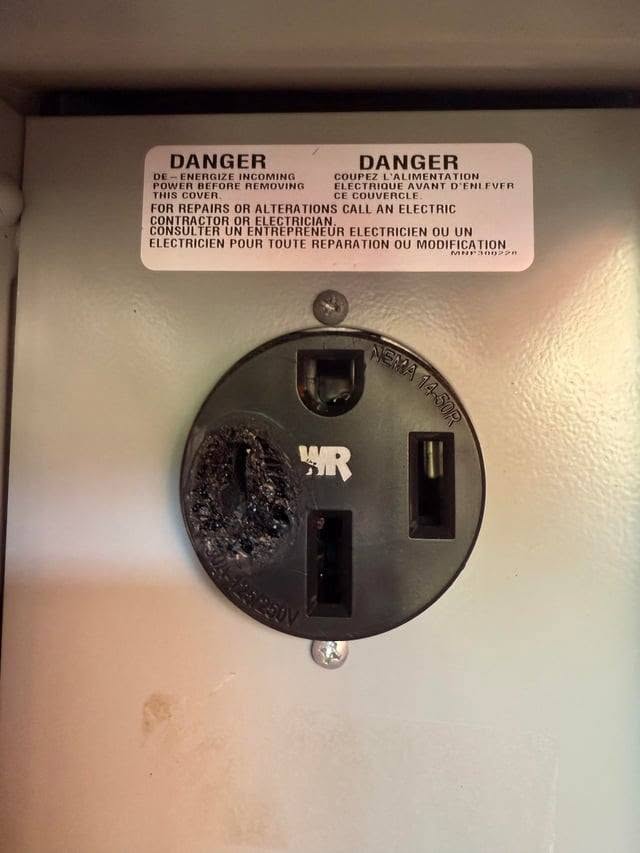
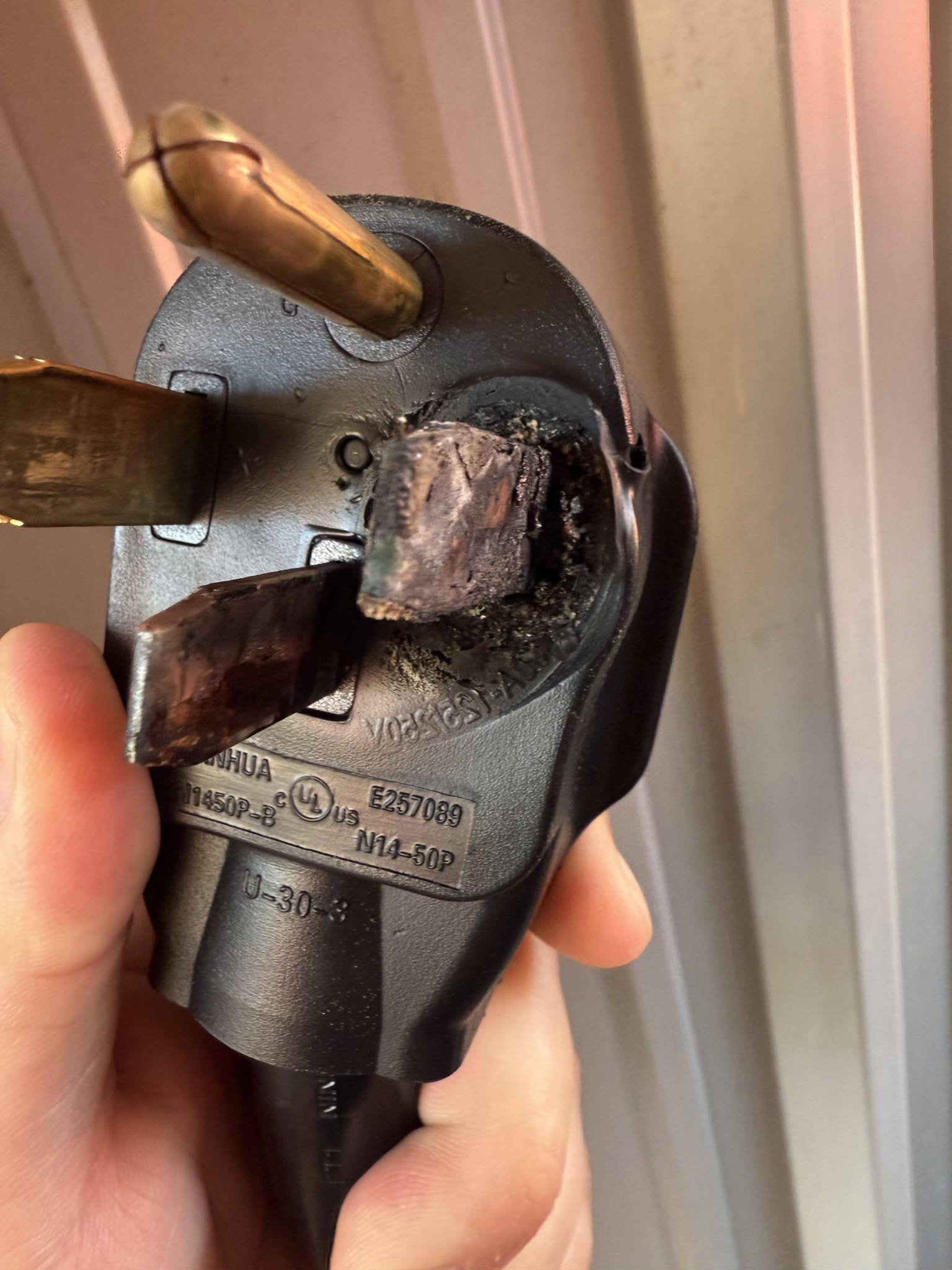
Left: A NEMA 14-50 receptacle with one slot melted and charred from sustained heat. Right: The matching failure on the charger plug itself — a blade melted and blackened at its base. This is heat damage, not normal wear.
What makes an outlet EV-rated?
True EV-rated or industrial-grade outlets — often marked with a green EV logo, like the Leviton receptacle pictured below — are specifically designed to survive these conditions:
- Robust materials: High-temperature-resistant thermoset plastics that will not soften or deform under sustained heat.
- Thicker, heavy-duty contacts: Massive, high-pressure copper alloy contacts that maintain a tight, low-resistance grip on the charger’s plug blades over thousands of thermal cycles.
- Superior terminals: Terminals that allow for secure wire termination that can be torqued tightly to prevent loose connections.
When you shop for one, look for the green EV symbol on the face of the receptacle. On the Leviton example below it sits at the upper right, next to the markings that read “50A – 125/250V” and “NEMA 14-50R.” If the outlet in your garage has no EV marking, it is worth having it checked before you rely on it for nightly charging.
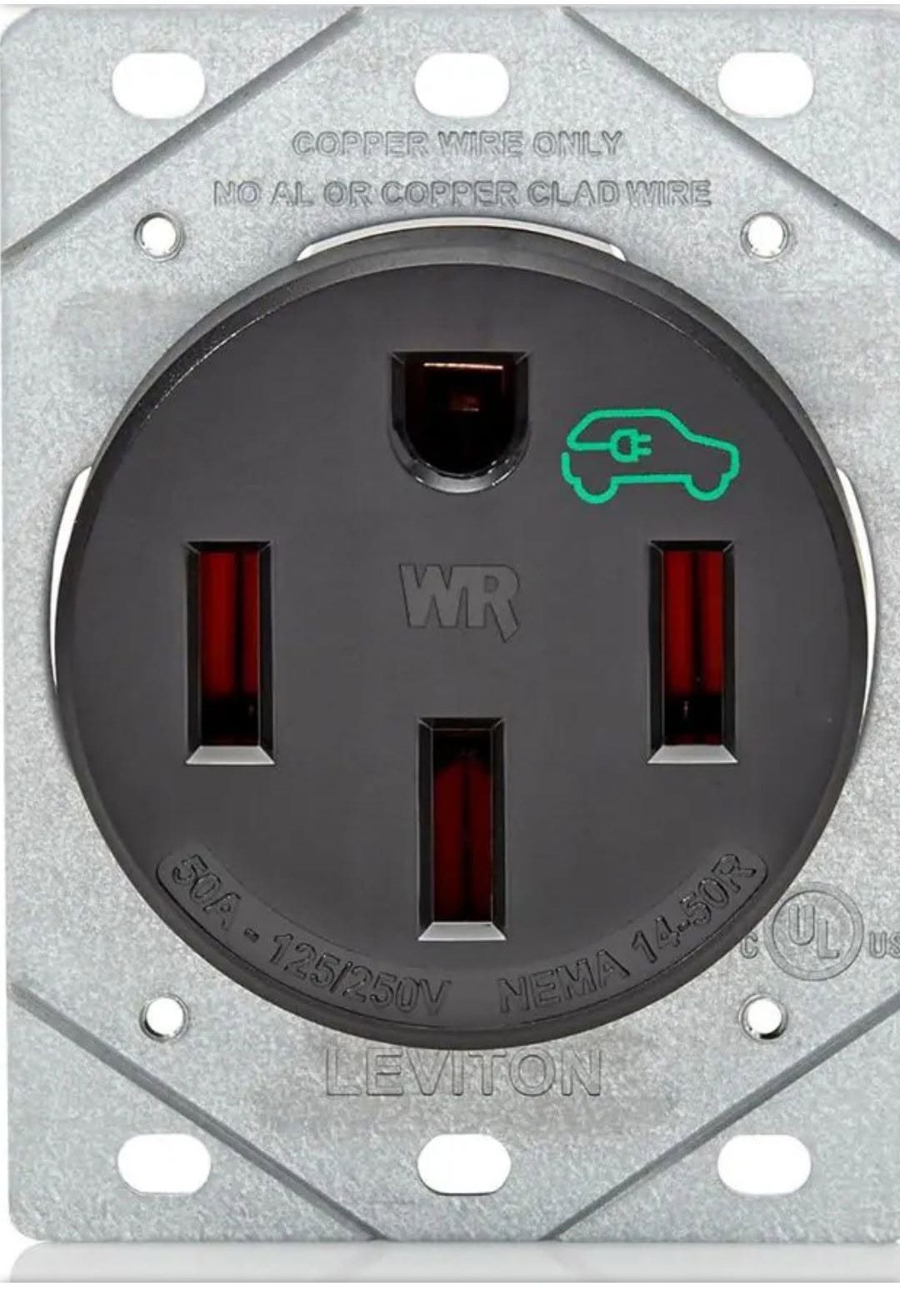
An EV-rated Leviton NEMA 14-50R receptacle. Note the green EV logo at the upper right of the face, the “WR” (weather resistant) marking, and “COPPER WIRE ONLY” stamped on the mounting strap.
The safest option: hardwire the charger
Whenever possible, many electricians also recommend hardwiring a Level 2 EV charger directly to the electrical circuit. Hardwiring completely eliminates the outlet and plug as potential points of failure, providing the safest and most reliable long-term setup.
If your charger plugs in instead, have a licensed electrician confirm that the receptacle is EV-rated or industrial-grade, that the terminations are tight and properly torqued, and that there is no sign of heat damage, discoloration, or melting. If you ever see scorching, a melted slot, or a plug that is hot, discolored, or hard to insert or remove, stop using it and have it evaluated right away.
Buying or selling a home with an EV charger? We look at the charging outlet as part of a home inspection and will flag a standard-grade receptacle being used for EV charging. — HTown Inspections, Houston, Texas